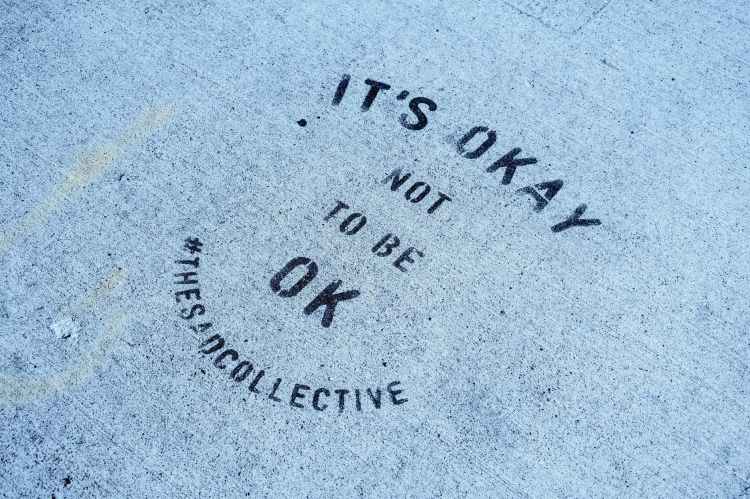
The term normalizing mental health disorders is not meant to discount what mental health disorders are or how heavy that it is for some people and the effect that it has on their daily lives and their overall well-being. It is important to normalize mental health disorders because it opens the dialogue to having uncomfortable conversations about mental health disorders. Individuals should be able to comfortably have these conversations, without having to worry about being judged by their peers. Statistically, People of Color (POC) do not talk about mental health disorders or embrace the idea of getting therapy.
Top 3 Reasons Why POC Do Not Seek Help for Their Mental Health Concerns/Issues
- The stigma attached to mental health disorders.
- A lack of health insurance and/or coverage.
- An insufficient number of POC that are therapists.
Stigma
The stigma attached to mental health concerns and disorders has a lot to do with the lack of education associated with what mental health disorder is. Society is quick to judge what they don’t understand. How many times does society loosely use the derogatory R-word, crazy, or psycho to describe the actions or behaviors of people with mental health disorders? Society does this without putting any thought into what that person may be dealing with psychologically and/or their intellectual level that often contributes to their behavior. Self-perceived stigma is a direct result of social stigma. Who are we to judge or shun people with mental health disorders? A wise man once told me that it is better to talk to people than to talk about people. The best way to understand what a person is truly going through is to talk to them and get the accurate version straight from the source. Some people suffering from mental health disorders are not intellectually equipped to articulate their issues or feelings, that is where the professionals come in at. Everyone that needs or wants counseling and therapy do not have a mental health disorder.
It is important that the stigma attached to mental health disorders be diminished. The stigmas attached to mental health disorders, specifically within the communities of POC, are one of the main reasons why POC will not get the help that they need. A lot of people are existing with the misconception that they are just messed up. They have to some degree, been bullied into thinking that their need for therapy is a sign of weakness…and as a result, the majority of these people will stuff their feelings deep down inside and ignore them. What they need is to be understood, accepted, and embraced without judgment.
Lack of health insurance and/or coverage
Statistically, only 1 in 3 POC who need mental health care will seek help. Some of the reasons are as follows:
- Lack of health insurance and/or coverage. Many POC do not have health insurance and if they do have health insurance it may not cover psychological and psychiatric services. What many people were not aware of is that at the beginning of the Covid-19 pandemic many insurance companies were offering services to cover mental health services and are also waiving copays for mental health services as well as offering telehealth visits for their members. That still does nothing for the people that have no job and no health insurance…what options do they have? There are services available for the uninsured. There are local facilities that offer services on a sliding scale fee and some for free. There is information online that will put people in contact with organizations that can help. They can contact SAMHSA by calling 1800-662-HELP (4357) and/or they can go online to the Treatment Locator.
- Lack of interest in getting help because they have been programmed to view it as a sign of weakness.
- Afraid that people will call them crazy.
An insufficient number of POC Therapists:
Many POC do not feel comfortable sitting down and spilling their guts to someone that is not the same ethnicity as they are and may know nothing about who they are culturally and will not be able to relate to their struggles in life. They do not want to talk to someone who can only offer them textbook information…they would rather talk to someone that has some life experiences and can truly relate to them and understand their plight they want someone that they can be real with!
There is a great need for mental health services for diverse communities and professional POC to provide those services. Statistically, POC are 20% more likely to have mental health issues. Most that have sought out help for their problems have been misdiagnosed and/or overdiagnosed.
- For many years POC have been misdiagnosed, attributing to the low percentage of POC therapists available that can understand them and their situation. POC psychotherapists are less likely to misconstrue a person’s feelings or their responses as a mental health disorder.
- The Diagnostic and Statistical Manual of Mental Disorders, 5th Edition (DSM-5) has brought attention to the importance of all therapists knowing different cultures and their behaviors. As a therapist, it is imperative that they have some knowledge of diverse cultures so that they can properly assess and diagnose them. Their behaviors are often misconstrued as a disorder…hence POC being given the wrong diagnosis by therapists that do not truly know their culture. It is crucial to have the correct diagnosis in order to provide effective treatment. Imagine if your doctor prescribed you medication for an illness that you do not actually have…how effective would that medication be in treating your actual illness?
- Institutional racism is when an organization does not give the same service to POC that they would to others due to their lack of knowledge of the person’s culture or ethnicity and the prejudices or stereotypes that are attached to POC.
These are only three of the primary reasons that POC are suffering in silence. They do not have any faith in the healthcare system, they have been programmed by society into thinking mental health issues are taboo, and the fact that there needs to be more training and availability of psychotherapists that know how to handle POC mental illnesses.
Everyone that needs or wants counseling and therapy do not have a mental health disorder. What are your thoughts on normalizing mental health disorders? What reasons would keep you from seeking counseling?
 SPWS
SPWS 